Tuesday, July 11, 2006
Sean McGrath, CTO, Propylon: WIKIs - a tipping point for the Web?
Sean McGrath, CTO, Propylon: WIKIs - a tipping point for the Web?: "'Is the Web just a hyperlink's way of making another hyperlink in the same way that a chicken can be viewed as an egg's way of making another egg?' -- WIKIs - a tipping point for the Web?"


Monday, July 10, 2006
Manta and friends flying to London
We have had an abstract accepted for the (re)Actor: The First International Conference on Digital Live Art September 11, 2006 in London, which looks like great fun.
The conference will include both day time presentations and evening ambient after party.
Performances and presentations were solicited in all areas of Digital Live Art, including but not limited to:
Increasingly we all swim through a transparent sea of cyberspace. An important function of both digital Art and HCI design is to help us navigate, perceive and feel at home in this “strange new land”. This spring a graduate class on “Innovation and Invention” at Rochester Institute of Technology deployed an ultra-light cable-array robot, a projection of cyberspace, and a fiberglass mobile of a manta ray, all controlled by a human operator with a data glove (http://www.vrealities.com/P5.html). Made of flexible fiberglass kite rods and suspended by fishing line to 4 computer-controlled motors, this “wireframe” apparition moved with surprising vigor through a 3-story atrium accompanied by projected digital images snatched from the ambient ether of local wifi networks. The project itself taught us some interesting lessons about the role of intuition and muscle memory in computer-mediated tele-operation.
Even in its first rendition, the artistic piece made an interesting artistic statement and was an entertaining accompaniment to a social event. It would fit in perfectly with the after-party but we would also welcome an opportunity to speak more academically about some technical and artistic issues that arise.
A 11 minute video of the manta's debut is at http://jonschull.blogspot.com/2006/06/fanfare-for-common-manta.html
The conference will include both day time presentations and evening ambient after party.
Performances and presentations were solicited in all areas of Digital Live Art, including but not limited to:
- Creative clubbing and the playful arena
- Space, body, machine
- Inputs and outputs – co-creation and the dialogic exchange within digital live arts practice
- Computing for the experiential and cerebral
- Performance and the design of interactive interfaces
- Experimental music technology
- Creative displays and projections
- Tools for performers, participants and observers
- Networking, open-source clubbing and the free party
- Models and formal methods of interaction
- Her-story and his-story of computing and clubbing
Physical Flight through Cyberspace: an Interactive Ultra-Light Cable Array Mobile with Novel Input Methods
Jon Schull
Brian Ballsun-Stanton
Rochester Institute of Technology
Jon Schull
Brian Ballsun-Stanton
Rochester Institute of Technology
Increasingly we all swim through a transparent sea of cyberspace. An important function of both digital Art and HCI design is to help us navigate, perceive and feel at home in this “strange new land”. This spring a graduate class on “Innovation and Invention” at Rochester Institute of Technology deployed an ultra-light cable-array robot, a projection of cyberspace, and a fiberglass mobile of a manta ray, all controlled by a human operator with a data glove (http://www.vrealities.com/P5.html). Made of flexible fiberglass kite rods and suspended by fishing line to 4 computer-controlled motors, this “wireframe” apparition moved with surprising vigor through a 3-story atrium accompanied by projected digital images snatched from the ambient ether of local wifi networks. The project itself taught us some interesting lessons about the role of intuition and muscle memory in computer-mediated tele-operation.
Even in its first rendition, the artistic piece made an interesting artistic statement and was an entertaining accompaniment to a social event. It would fit in perfectly with the after-party but we would also welcome an opportunity to speak more academically about some technical and artistic issues that arise.
A 11 minute video of the manta's debut is at http://jonschull.blogspot.com/2006/06/fanfare-for-common-manta.html
Saturday, July 01, 2006
ControllerMate
ControllerMate is a controller programming tool that allows you to customize the behavior of your HID devices — keyboards, keypads, mice, trackballs, joysticks, gamepads, throttles, among others. ControllerMate’s philosophy is to be as flexible as possible, to provide a set of basic programming tools, and to allow the user to combine those tools in an endless variety of ways.
Controller programming — A new approach
In order to program the buttons on a controller, one might expect that a user would be presented with a list of buttons and a list of available functions. Match the button to the desired function. Simple. Effective.
ControllerMate allows you to create virtual mouse, tablet and joystick devices. These are devices that are created entirely by you, but applications will see them just like the devices that you have plugged into your computer. Using ControllerMate’s building blocks and controller configurations, you can control every move that these virtual devices make. Among other uses, you can use a virtual device to turn a joystick into a full-featured mouse.
Controller programming — A new approach
In order to program the buttons on a controller, one might expect that a user would be presented with a list of buttons and a list of available functions. Match the button to the desired function. Simple. Effective.
ControllerMate allows you to create virtual mouse, tablet and joystick devices. These are devices that are created entirely by you, but applications will see them just like the devices that you have plugged into your computer. Using ControllerMate’s building blocks and controller configurations, you can control every move that these virtual devices make. Among other uses, you can use a virtual device to turn a joystick into a full-featured mouse.

Friday, June 30, 2006
Attractive manta seeks traveling companion for fame and fortune.
Vendors! Be the first micro-projector vendor on the block to illuminate an ultralight flying manta ray cable array biomimetic robotic mobile sculpture installation!

Explay's digital projector to hit the market in 2007.
See also PVPro and Digismart.
Explay's digital projector to hit the market in 2007.
See also PVPro and Digismart.
Wednesday, June 21, 2006
Fanfare for the Common Manta.
You'll laugh, you'll cry.
You'll really believe a manta can fly.
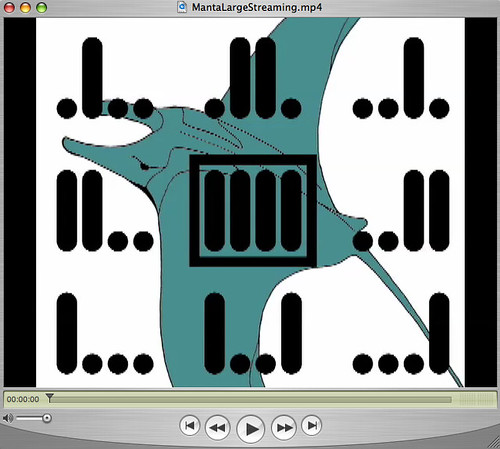
kudos, Brian!
Smart power, chain stores, and social consciousness
Smart power, chain stores, and social consciousness:
For my weekly podcast, [Jon Udell] interviewed Mike Frost, CEO of Site Controls, a three-year-old Austin startup that's focused on the part of the energy web that can be built out now, for profit, with near-term return on investment and a growth path that could eventually produce macro-level network effects. [Full story at InfoWorld.com]
For my weekly podcast, [Jon Udell] interviewed Mike Frost, CEO of Site Controls, a three-year-old Austin startup that's focused on the part of the energy web that can be built out now, for profit, with near-term return on investment and a growth path that could eventually produce macro-level network effects. [Full story at InfoWorld.com]
Monday, June 19, 2006

Sunday, June 18, 2006
What to do with the US Mexico Border

A Fence With More Beauty, Fewer Barbs - New York Times
This is a great line of inquiry.
Blogged with Flock
Thursday, June 15, 2006
Publish iCal calendars without .Mac
Publish iCal calendars without .Mac: "iCal publishing requires WebDAV. But now there's a way.
Box.net offers free 1GB accounts, and their servers run WebDAV. So here's what you need to do, in a nutshell:
Set up your box.net subscription (easy and fast!).
In iCal, publish your calendar (Calendar -> Publish) to https://www.box.net/dav, using your box.net account name (email) and password.
Subscribe to the calendar in iCal (Calendar -> Subscribe) at http://www.box.net/dav/Your_Calendar.ics. NOTE: Do not use https here.That's it!
"
Box.net offers free 1GB accounts, and their servers run WebDAV. So here's what you need to do, in a nutshell:
Set up your box.net subscription (easy and fast!).
In iCal, publish your calendar (Calendar -> Publish) to https://www.box.net/dav, using your box.net account name (email) and password.
Subscribe to the calendar in iCal (Calendar -> Subscribe) at http://www.box.net/dav/Your_Calendar.ics. NOTE: Do not use https here.That's it!
"
Wednesday, June 14, 2006

Tuesday, June 13, 2006
NYTimes Video Projections on a Globe Make Planetary Data Click

Video: Science on a Sphere
http://www.nytimes.com/2006/06/13/science/13sphe.htmlThe display is Science on a Sphere (http://sos.noaa.gov/) , a pioneering system for presenting planetary portraits gathered from satellites and other spacecraft. Essentially a spherical movie screen of white fiberglass, six feet in diameter, it displays video images from four computer-controlled projectors. Though stationary, it gives the illusion of spinning as the images move, and the nearly invisible wire that holds it up makes it seem to be floating in space.
Are we ready for some real crossdisciplinary and transdisciplinary experimentation?
Our standard solution to the staying power of the conventional disciplinary/departmental structure is to add new courses, and then new programs, without changing much of the existing structure. Multidisciplinary efforts might sound innovative, but they don't change much. If we desire really innovative, comprehensive, pervasive, cross-campus configurations, then we must accept much greater structural flexibility than our current system allows. Department and college boundaries must become much more permeable. Joint and even floating appointments should become prevalent, and we should be constantly reinventing ourselves and our structure. Are we ready for some real crossdisciplinary and transdisciplinary experimentation?
--Raymond C. Millerhttp://www.sfsu.edu/~uic/intervsmulti.html
Friday, June 09, 2006
cannot open display: :0.0
For the Nth time, I have had to remember how to configure the X11 display variable to cope with this error
Gtk-WARNING **: cannot open display: :0.0
when running vpython on Mac OS X
First, I need to be running x11 (I knew that)
Second, I need to run the appropriate version of python /sw/bin/python2.4 (I knew that)
Third, my .tcshrc file needed to contain this line
setenv DISPLAY :1.0
Now that's unusual. Usually, it's 0.0
indeed, a few days later and I have to set it back to 0.0
why??
You've got to get them all right all the time (I know that, and I resent it.)
Gtk-WARNING **: cannot open display: :0.0
when running vpython on Mac OS X
First, I need to be running x11 (I knew that)
Second, I need to run the appropriate version of python /sw/bin/python2.4 (I knew that)
Third, my .tcshrc file needed to contain this line
setenv DISPLAY :1.0
Now that's unusual. Usually, it's 0.0
indeed, a few days later and I have to set it back to 0.0
why??
You've got to get them all right all the time (I know that, and I resent it.)
Wednesday, June 07, 2006
Mount a Box.net account on a Mac
Mount a Box.net account on a Mac: "Filed under: Software, Internet Tools
Box.net is an iDisk-like service that allows you to mount an 'internet hard drive' on your desktop (they offer both free and paid accounts).
1 GB is free, while 5 GB is $4.99/month, and 15 go for $9.99/month. Enjoy.
Permalink | Email this | Linking Blogs | Comments
"
Box.net is an iDisk-like service that allows you to mount an 'internet hard drive' on your desktop (they offer both free and paid accounts).
1 GB is free, while 5 GB is $4.99/month, and 15 go for $9.99/month. Enjoy.
Permalink | Email this | Linking Blogs | Comments
"
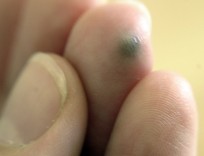
Implanting a magnet in your fingertip adds a sixth sense
Implanting a magnet in your fingertip adds a sixth sense: -- people who've had the implant report that they can tell when a wire is live and when they're going through a magnet security-scanner at a store, even when their laptops' hard drives are spinning up.
Friday, May 26, 2006
HOW TO - Build a tensegrity coffee table
HOW TO - Build a tensegrity coffee table: "
Justin writes - 'Here's how to build a tensegrity coffee table. I was searching for pvc furniture pipe and luckily stumbled across this site.' - Link.

Justin writes - 'Here's how to build a tensegrity coffee table. I was searching for pvc furniture pipe and luckily stumbled across this site.' - Link.
Open travel-time maps of the UK
Open travel-time maps of the UK: "Cory Doctorow: The MySociety project has produced an incredible set of travel-time maps of the UK, showing the voyage-time using color shading (red for close, blue for far) and contour lines to indicate each hour's travel -- they compare the overall travel time for going from A to B by rail and car and cab. They're laying an open geodata-bank for use in correlating house prices to travel times, cost-to-time, and generating realtime web-services. Link (via boingboing via Oblomovka)
"
"
Tuesday, May 09, 2006
Software Carpentry is Great!

| Version 1122 (Sun May 7 15:02:14 2006) |
The ProblemMany scientists and engineers spend much of their lives writing, debugging, and maintaining software, but only a handful have ever been taught how to do this effectively: after a couple of introductory courses, they are left to rediscover (or reinvent) the rest of programming on their own. The result? Most spend far too much time wrestling with software, instead of doing research, but have no idea how reliable or efficient their programs are. The SolutionThis site presents an intensive course on basic software development practices for scientists and engineers. Its aim is not to turn biochemists and mechanical engineers into computer scientists; instead, it introduces them to the 10% of modern software engineering that will satisfy 90% of their needs. The course has been taught at laboratories and universities in Canada and the United States since 1998. It is now being upgraded, and will be made freely available under an open license in the fall of 2005. StatusThis Nature article describes the course's background and goals in more detail. See this page for known issues with the course. | Lectures |
Tuesday, May 02, 2006
jfugue, jython, jjedit, classpath, vpython, music viz
So I'm working on music visualization (with vpython) and would like to play the tunes I am visualizing. There are some very sophisticated sound tools out there, but simple real-time ones are hard to find. (I'd be happy to be able to specify pitch and duration, but no....).
Anyway, JFugue is admirably clean and simple looking, but written in java.
http://www.jfugue.org/
I've had some luck with jython recently, so I thought I'd pursue it. www.jython.org
First the happy ending,
[208-186-48-2:remo/MusicViz/JFugue] apple% jython
Jython 2.2a0 on java1.5.0_06 (JIT: null)
>>> from org.jfugue import *
>>> player=Player()
>>> pattern=Pattern("C D E F G A B C")
>>> player.play(pattern)
(music!)
For this to work, I need only have JFugue's directory tree called "org" in the current directory.
The above four lines are considerably shorter and simpler than than original java
import org.jfugue.*;
public class MyMusicApp
{
public static void main(String[] args)
{
Player player = new Player();
Pattern pattern = new Pattern("C D E F G A B");
player.play(pattern);
System.exit(0); // If using versions lower than Java 5.0
}
}
and to run the java code you must apparently
1) give the file the name MyMusicApp.java
2) compile the file using the incantation
javac -classpath ./jfugue.jar MyMusicApp.java
3) run the file using the incantation
java -cp ./jfugue.jar:. MyMusicApp
(and the colon is a mac-specific necessity. On windows you use semicolon(??))
Typing the classpath is a nuisance, and getting it into the environment requires the kind of unix geekery that drives me crazy. But I did find a really elegant little java IDE called JJEdit that gives you a compile button and a run button, and a form-field into which you can enter a classpath of ./ and get on with iterative development. http://homepage.mac.com/jmacmullin/
So this is more bearable, if much more cumbersome than working in jython.
On the other hand, I must say that the jython documentation leaves something to be desired. www.jython.org points you to an installer for Mac Classic(!) http://www.jython.org/platform.html.
Google led me to a darwin port installer which installed admirably and works as shown above.
But I just noticed
(a) that somehow I'm running version 2.2a0 and
(b) that it doesn't respond to command line arguments, so I can't run it non-interactively.
Fixing this will require tweaking the shell script that invokes jython I suppose...
but sheesh! Genuinely simple simplicity is apparently not simple....
Anyway, JFugue is admirably clean and simple looking, but written in java.
http://www.jfugue.org/
I've had some luck with jython recently, so I thought I'd pursue it. www.jython.org
First the happy ending,
[208-186-48-2:remo/MusicViz/JFugue] apple% jython
Jython 2.2a0 on java1.5.0_06 (JIT: null)
>>> from org.jfugue import *
>>> player=Player()
>>> pattern=Pattern("C D E F G A B C")
>>> player.play(pattern)
(music!)
For this to work, I need only have JFugue's directory tree called "org" in the current directory.
The above four lines are considerably shorter and simpler than than original java
import org.jfugue.*;
public class MyMusicApp
{
public static void main(String[] args)
{
Player player = new Player();
Pattern pattern = new Pattern("C D E F G A B");
player.play(pattern);
System.exit(0); // If using versions lower than Java 5.0
}
}
and to run the java code you must apparently
1) give the file the name MyMusicApp.java
2) compile the file using the incantation
javac -classpath ./jfugue.jar MyMusicApp.java
3) run the file using the incantation
java -cp ./jfugue.jar:. MyMusicApp
(and the colon is a mac-specific necessity. On windows you use semicolon(??))
Typing the classpath is a nuisance, and getting it into the environment requires the kind of unix geekery that drives me crazy. But I did find a really elegant little java IDE called JJEdit that gives you a compile button and a run button, and a form-field into which you can enter a classpath of ./ and get on with iterative development. http://homepage.mac.com/jmacmullin/
So this is more bearable, if much more cumbersome than working in jython.
On the other hand, I must say that the jython documentation leaves something to be desired. www.jython.org points you to an installer for Mac Classic(!) http://www.jython.org/platform.html.
Google led me to a darwin port installer which installed admirably and works as shown above.
But I just noticed
(a) that somehow I'm running version 2.2a0 and
(b) that it doesn't respond to command line arguments, so I can't run it non-interactively.
Fixing this will require tweaking the shell script that invokes jython I suppose...
but sheesh! Genuinely simple simplicity is apparently not simple....
Subscribe to:
Posts (Atom)

 Posts
Posts

