Have you ever wanted to
convert files without the need
to download software ?

Step 1
Select the files to convert(up to 100MB in size):
Step 2
Choose the format to convert to:
Have you ever wanted to
convert files without the need
to download software ?


Have you ever wanted to
convert files without the need
to download software ?
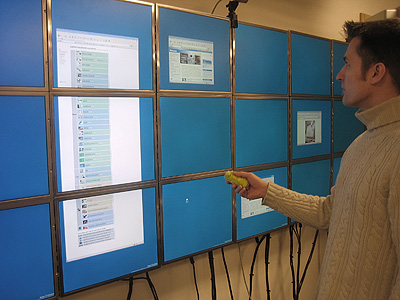
Figures 16—21 show various pieces and parts of the Wii for your amusement.


| |||||||||
| Call for Papers | Submission | Program | Venue | ||||||

 " T-shirts, buttons and other products featuring the reacTIVision fiducial symbols are now available for purchase! All designs on these products can be recognized and tracked by the actual reacTIVision software. "

By experimentation it can be demonstrated that the tetrahedron is the minimum shape or structure that energy can take. |
| The minimum "thing" or system in the universe has to be a tetrahedron. |
| Anything less is not a system and does not have the properties of a system. |
| Systems can be made out of triangles, but how many? |
| By experimentation it can be demonstrated that only 3 basic systems can be constructed out of equilateral triangles: tetrahedra, octahedra, & icosahedra. |
| Therefore, all of nature must be built up from some combination or multiple of only those three basic systems! |

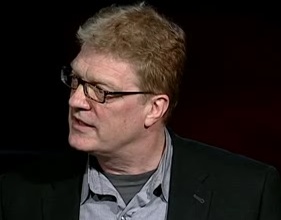
Sir Ken Robinson is author of Out of Our Minds: Learning to be Creative, and a leading expert on innovation and human resources. In this talk, he makes an entertaining (and profoundly moving) case for creating an education system that nurtures creativity, rather than undermining it. (Recorded February, 2006 in Monterey, CA.)
 Information Visualization and the dawn of the macroscope


Motion Capture is a technique that translates motions into 3D-files. Motion capture is mostly used for animations in movies and computer games. Front have used the technique to simply record the tip of a pen when they draw pieces of furniture in the air.
Rapid Prototyping is a technique that materialises 3D-files. A laser beam builds the 3D-file layer by layer within a liquid plastic material. Every 0.1mm the liquid harden by a laser beam. After a few hours, the 3D-files come out as materialised pieces.
The Sketch Furniture project in Japan is made in collaboration with Barry Friedman Ltd. Tokyo Wonder Site Aoyama and Crescent.
| strandbeest | | | |
| | | | |
| | Since about ten years Theo Jansen is occupied with the making of a new nature. Not pollen or seeds but plastic yellow tubes are used as the basic matierial of this new nature. He makes skeletons which are able to walk on the wind. Eventualy he wants to put these animals out in herds on the beaches, so they will live their own lives.
|


Download this article to get all the details and instructions from Make: 04.
...however, by far the most glorious and elaborate event preceding the main conference [HCI Engage 2006], in London] , was a conference in its own right. (re)Actor: the First International Conference on Digital Live Art, led by Jenn Sheridan of Lancaster University and Alice Bayliss of the University of Leeds, focussed on HCI, computing and club art: 'mobile, avant garde art, the kind not typically put in a theatre'. 22 papers, 12 installations and 10 performances (some impromptu) took over the staid but elegant Octagon at Queen Mary, University of London. It brought in several people from the States, including the designers of a giant ray-like suspended robot that swooped over the hall and was later customised to dance just over the heads of attendees for the evening session. As well as hosting stunning displays, like the jugglers with light, ReActor addressed the serious issue of evaluation of art, and determining value from an HCI perspective. The full line-up can be seen at http://www.digitalliveart.co.uk/....
 ... both DigiSlide and Light Blue Optics showing miniscule demonstration units in the last week...

SearchEngineWatch dug out this excellent 51-minute presentation by Carnegie Mellon’s Luis von Ahn (also of CAPTCHA fame), who talks about ESP Game, which Google subsequently licensed to create Labeller. If you’re wondering whether the Labeller will help Google catch up on Flickr’s tags, here’s a salient stat from the video (8 minutes in): in one year, 9 billion people-hours are spent playing Solitaire; it took 20 million human-hours to build the entire Panama Canal - no wonder the professor talks about finding ways to optimise human cycles :-).
from Ajaxian
Searching US Patent Collection...

| The Environmental Advocacy Program | Overview | Eight Key Ideas Foundation Areas | Program Requirements | Course Sequence | EAOP Blog Course Descriptions | FAQ | Job Opportunities | The Advocacy Clinic | Contact Us |
Ready for the next step in your leadership development and activism?
 Want to make a living working for environmental protection, corporate accountability, and social justice? We can provide you with the sustained political education and skill development you need to become an effective social change leader. Our new one-of-a-kind master's program in Environmental Advocacy and Organizing is currently accepting applications for next Fall.
“The Environmental Advocacy and Organizing Program is a unique gem in the academic world: a values-based training program for effective, progressive leadership. Its flexibility, its relevance to local, regional, national, and international issues, and its holistic approach to analyzing and helping to solve a wide range of environmental, economic, and social problems have made this program an invaluable undertaking.” Peter Alexander, M.S. '04


You'll laugh, you'll cry.
You'll really believe a manta can fly.
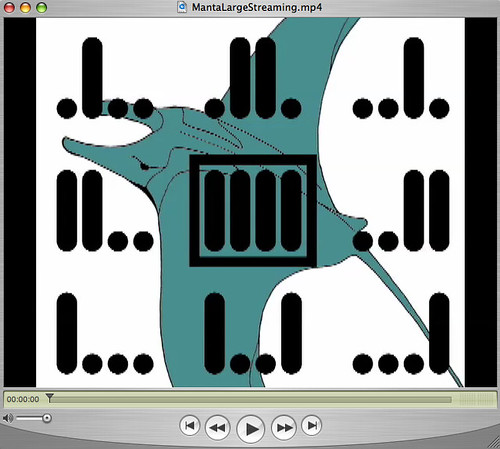
kudos, Brian!
A Fence With More Beauty, Fewer Barbs - New York Times
This is a great line of inquiry.
Blogged with Flock

Our standard solution to the staying power of the conventional disciplinary/departmental structure is to add new courses, and then new programs, without changing much of the existing structure. Multidisciplinary efforts might sound innovative, but they don't change much. If we desire really innovative, comprehensive, pervasive, cross-campus configurations, then we must accept much greater structural flexibility than our current system allows. Department and college boundaries must become much more permeable. Joint and even floating appointments should become prevalent, and we should be constantly reinventing ourselves and our structure. Are we ready for some real crossdisciplinary and transdisciplinary experimentation?
--Raymond C. Miller

 Posts
All Comments
Posts
All Comments


)
)
)
)